On Tests of Verbal Fluency, Reading Comprehension, Spelling, and Basic Writing Skills:
Spelling Automaticity
Many people have questioned the importance of teaching spelling in an age when our computers and our phones oft take spelling checkers and suggested words always available. Of course, these gadgets can suggest and corroborate words that are totally inappropriate to the context, oftentimes with comical results. In that location is an underlying question about the significance of spelling skills for literacy, reading comprehension, reading fluency, and writing skills. This article summarizes the research underlying the question of how spelling skills, such equally automaticity, build reading fluency and comprehension. It addresses the question of the research base of operations for the activities provided past VocabularySpellingCity.
The article is reprinted with permission by Diane East. Nies, Director of Professional Development and Publications, The International Dyslexia Association. Granted in writing, Apr 9, 2009. Original source: the International Dyslexia Clan quarterly newsletter, Perspectives, Winter, 2002, vol. 28, no. 1, pages ix-14. Signed Vocabulary and SpelliingCity Mayor
The Importance of Automaticity and Fluency For Efficient Reading Comprehension
by Pamela E. Hook and Sandra D. Jones
Reprinted with permission from the International Dyslexia Clan quarterly newsletter, Perspectives, Winter, 2002, vol. 28, no. 1, pages 9-14. IDA website: world wide web.interdys.org.
The reading process involves two split but highly interrelated areas – word identification and comprehension. It is well established that difficulties in automatic give-and-take recognition significantly affect a reader's ability to finer comprehend what they are reading (Lyon, 1995; Torgeson, Rashotte, and Alexander, 2001). Fifty-fifty mild difficulties in discussion identification tin can pull attending away from the underlying significant, reduce the speed of reading, and create the demand to reread selections to grasp the significant. Many students who struggle to acquire to read are able, with appropriate instruction, to compensate for initial reading problems by becoming accurate decoders but fail to reach a level of sufficient fluency to go fast and efficient readers. Thus, the evolution of techniques for improving automaticity and fluency is critical. Although the research is clear that a systematic alphabetic arroyo to instruction beginning readers is more constructive than a whole discussion approach (Adams, 1990; Chall, 1996; Snow, Burns and Griffin, 1009), the near effect ways to develop fluency are less well understood. Although current enquiry has given united states some direction about effective methods for increasing fluency (National Reading Panel, 2000), further systematic research is needed to give us more comprehensive answers to questions concerning the best methodologies, types of materials, and length/intensity of interventions necessary for optimal gains. The purpose of this article is to advise some techniques that are consistent with the inquiry and have been plant to be either clinically constructive or logically appropriate.
What are Automaticity and Fluency?
Automaticity is defined as fast, accurate and effortless discussion identification at the unmarried word level. The speed and accurateness at which unmarried words are identified is the all-time predictor of comprehension. Fluency, on the other hand, involves not only automatic word identification but too the application of appropriate prosodic features (rhythm, intonation, and phrasing) at the phrase, judgement, and text levels. Wood, Flowers, and Grigorenko (2001) emphasize that fluency besides involves anticipation of what will come next in the text and that speeded practice alone is not sufficient. Apprehension facilitates reaction fourth dimension and is especially of import for comprehension.
What are the relationships among phonemic awareness, phonics and orthographic reading?
The ability to read fluently develops during Jeanne Chall's Stage ii of reading, Ungluing from Print, which for well-nigh students occurs around 2d to tertiary grade. (For a complete discussion of Chall'due south stage theory of reading acquisition, delight see Chall, 1983.) This is the last stage where the educatee is developing skills related to "learning to read" and after this stage, the kid will be required to shift to an emphasis on "reading to learn." The type of text being read shifts from beingness primarily narrative to expository and the language complexity of the written material begins to increase dramatically (including vocabulary level, sentence complexity, and text structure). The importance of background knowledge for comprehension also increases. Fluent reading at this bespeak is essential.
Automated reading involves the evolution of strong orthographic representations, which allows fast and accurate identification of whole words made upward of specific letter patterns. English language orthography is generally alphabetic in nature and initially word identification is based on the application of phonic word attack strategies (letter of the alphabet-sound association). These word attack strategies are in turn based on the evolution of phonemic awareness, which is necessary to learn how to map oral communication to print. It is of import to keep in listen that prior to the stage where children read orthographically, they apply alphabetic strategies to analyze words (Frith, 1985).
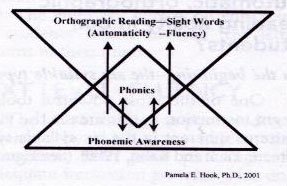
Figure 1: Relationships Among Phonemic Awareness,
Phonics, and Sight Discussion Recognition Skills.
Figure 1 illustrates the relationships among the processes involved in discussion identification. The bottom of the figure depicts a strong base in phonemic awareness upon which discussion identification skills are built. There is, however, a reciprocal relationship between the development of phonemic sensation and the evolution of phonic discussion attack strategies. As the child becomes more familiar with letters, phonemic awareness too improves. Ultimately, stiff underlying orthographic patterns begin to emerge.
About children go through this process relatively seamlessly, moving easily from the use of alphabetic strategies to the conception of stiff orthographic representations that tin be accessed automatically. There is, however, a percentage of "at risk" children (approximately 20-40% depending on the specific school demographics) who benefit from having phonemic sensation and phonic discussion attack strategies systematically taught. There is also a smaller percentage of children who will need more intensive piece of work in this area (Meet Sanders 2001 for a more in-depth discussion). The children who struggle the most with learning to read also fail to develop adequate automaticity (orthographic reading) and demand structured, systematic training in this surface area. It appears that early preventive intervention may be particularly important in the development of automaticity and fluency (Torgeson et al, 2001).
Word LEVEL-AUTOMATICITY
How do we develop this automatic, orthographic reading ability in our students?
In the beginning – the six syllable types
One of the most powerful tools to brainstorm educational activity in this area is using the visual patterns inherent in the six syllable types (Steere, Peck and Kahn, 1988.) (Run across Effigy 2.)
i. closed –not
(airtight in by a consonant – vowel makes its short sound.
2. open – no
(ends in a vowel – vowel makes its long sound
iii. silent eastward – note
(ends in vowel consonant east – vowel makes its long audio
4. Vowel combination – smash
(the two vowels together make a sound)
five. r controlled – bird
(contains a vowel plus 4 – vowel audio is changed)
6. consonant- l -e – table
(at the terminate of a word)
It is these letter (orthographic) patterns that signal vowel pronunciation. For example, while 1 or more consonants at the end of a syllable (closed syllable type) signals a brusque vowel audio, a vowel at the cease signals a long vowel audio, etc. Highlighting, underlining, or enhancing the saliency of the visual design in some way is recommended to direct the educatee'southward attending to the critical components of the orthographic epitome. Students must become able non only to apply their noesis of these patterns to recognize the syllable types, but to run across these patterns automatically, and ultimately read words as wholes rather than through the application of discussion attack strategies. This need to move from decoding to automated recognition was recognized years ago by Anna Gillingham when she incorporated the Phonetic Give-and-take Cards activity into the Orton-Gillingham lesson program (Gillingham and Stillman, 1997). This activity involves having the student practice reading words (and some nonwords) on cards as wholes beginning with elementary syllables and moving systematically through the syllable types to complex syllables and two-syllable words. The words are divided into groups that correspond to the specific sequence of skills being taught.
Emphasis
In improver to acquiring phonic give-and-take assault strategies, prosodic features at the give-and-take level such equally stress on syllables are of import. At times, poor readers can accurately decode a word but true recognition of the word eludes them because they accept non correctly accented 1 of the syllables. Dyslexic students often have difficulty hearing the absolute syllables in a give-and-take, so teachers should showtime determine if a student is able to discriminate and identify through listening alone. If a student cannot hear differences, lessons should begin with listening practice and then motility to oral product. Visual and tactile/kinesthetic strategies can exist incorporated with listening if necessary.
A instructor tin begin to practice listening for and producing accented syllables using the alphabet.
The alphabet is presented in pairs and one alphabetic character of the pair is accented until a student is successful. The teacher begins presenting the emphasis only on the first letter until the student is consequent and and then presents the accent simply on the second letter. When a student can do both of these successfully, the teacher can then nowadays mixed pairs to practice (e.yard., A'B C'D Due eastF or GH' IJ' ThousandL' or M'N O P' Q'R). Instruction should motility every bit speedily as possible from using the alphabet to using existent words. The teacher tin begin with names to practice listening for absolute syllables (e.one thousand., Court' ney, Michelle', Ty ler, Je sus').
Mirrors tin can be used for visual reinforcement and so students can run into that their mouths open wider when they produce an accented syllable. If students need more reinforcement, they tin can place their easily along their jawline and feel the jaw opening wider on the accented syllable. Visual signals such as bolding or accent marks can be used to betoken which syllable is accented. Manipulatives such as tokens or blocks can also be used to indicate accent placement by moving the token for the absolute syllable college than the tokens for the unaccented syllables (come across Bong, 1997 for a consummate description of this arroyo).
Training and Linking the Orthographic Processor
Although most students learn to apply the rules of phonic give-and-take attack strategies and after of prefix, stem, and suffix through multisensory, structured systematic teaching techniques and go quite accurate in their reading, many remain slow and laborious. They take problem moving to the adjacent level of automatic orthographic reading and thus comprehension suffers. Even adults who take seemingly compensated for their reading difficulties even so require extended time when taking tests. These students need systematic training in the development of strong orthographic representations that volition permit them to read quickly and effortlessly.
Approaches have been developed that utilise a diversity of repeated reading strategies to strengthen these orthographic images.The automated recognition of single graphemes is a critical start step to the evolution of the letter patterns that brand up words or discussion parts (Adams, 1990). English orthography is fabricated upwardly of iv basic kinds of words: one) regular for reading and spelling (due east.thou., mat, dart; 2) regular for reading merely not for spelling (e.g. boat, pelting – could exist spelled "bote" or "rane" respectively); 3) rule based (e.grand., planning – doubling rule, baking – drop e rule); and 4) irregular (e.g. dazzler – it should exist noted that nigh parts of an "irregular" word are actually regular and only the irregular part needs to be specifically addressed).
Students must learn to recognize all 4 types of words automatically in guild to exist effective readers; thus, techniques for developing strong orthographic representations for all types of words are essential. Extensive opportunity for repeated do in design recognition is ofttimes necessary. In order to strengthen the letter patterns associated with the six syllable types and other rule based orthographic patterns in English (such as e, i and y signalling the pronunciation of c and m, Fischer (1994) has developed drills to "train the orthographic processor" which involve having the student marking the vowels long or short based solely on the letter patterns contained in the discussion. They do non actually read these words, merely instead focus attention on the letter of the alphabet pattern. The next step is to "link the phonological and orthographic processors" which involves saying only the vowel audio of the words rather than reading the word. Once more, the focus is primarily on the orthography. Other ways of emphasizing orthography would be card sorts where students sort different syllable types into appropriate categories every bit quickly as possible then say the vowel sounds of each syllable type every bit quickly every bit possible.
Single word level give-and-take drills – regular and irregular words
Once these orthographic signals have become automatically recognized, the students complete speed drills in which they read lists of isolated words with contrasting vowel sounds that are signaled by the syllable type. For example, six to eight closed syllable and vowel-consonant-eastward words containing the vowel a are arranged randomly on pages containing about 12 lines and read for one minute. Private goals are established and charts are kept of the number of words read correctly in successive sessions. The same word lists are repeated in sessions until the goal has been accomplished for several sessions in a row. When selecting words for these word lists, the utilise of high-frequency words within a syllable category would increase the likelihood of generalization to text reading. (See the SPIRE program, Clark-Edmands, 1998, for give-and-take lists based on frequency.)
These same kinds of speed drills can be used for irregular words besides equally multisyllable words that incorporate higher-level concepts of structural analysis (prefix, stalk, and suffix). At the multi-syllable level, automatically recognizing both the visual patterns related to syllable division as well as prefixes, stems, and suffixes (larger chunks) can be very helpful. The syllable division rules around vccv and vcv syllable patterns can railroad train the student to recognize visual patterns that signal pronunciation. The SPIRE program contains speed drills that at kickoff mark these syllable breaks as well equally prefixes and suffixes and then fade the cues every bit the student progresses through the skill.
Not merely do good readers read fluently with acceptable speed, simply when they read aloud, they besides apply advisable phrasing, intonation, and their oral reading mirrors their spoken language.
Air writing – development of symbol imagery
In improver to repeated readings of words or word parts, specific techniques have been developed to strengthen the orthographic representations past the use of multisensory activities that link the motor and visual modalities to reinforce the auditory. Tracing, copying, and writing words have long been a part of many multisensory, structured linguistic communication approaches (e.chiliad., see Gillingham and Stillman, 1997 and Raines 1980 for a complete discussion of these techniques.) Sky writing, which involves using gross motor movements of the whole arm to form letters in the air, has also been used to help reinforce single letter germination by combining visual, auditory and tactile-kinesthetic cues. More recently an air writing technique has been included as a component of a program intended to better symbol imagery, or the germination of orthographic representations (i.eastward., Seeing Stars Nanci Bong, 1997). This technique involves having the educatee look at a discussion or give-and-take part pronounced by the instructor, name the letters, and and so apply his finger to write the discussion in the air directly in his visual field while looking at his finger. The student then reads the word from retentivity and the teacher questions him almost the order and placement of specific letters in the word (eastward.grand., "What is the tertiary letter in the syllable?" "What is the second letter?" etc.). The emphasis hither is on enhancing the students' ability to "see" the letter patterns in their minds.
TEXT LEVEL – FLUENCY
The lack of fluency in poor readers is evidenced by their slow, halting, and inconsistent rate; poor phrasing; and inadequate intonation patterns. Not only do good readers read fluently with adequate speed, but when they read aloud, they also utilize appropriate phrasing, intonation, and their oral reading mirrors their spoken language. Although practices that incorporate prosodic reading have not produced stronger fluency gains (Torgesen et al., 2001), application of appropriate phrasing and prosodic features is of import for comprehension and should be direct addressed particularly with children who do not do this naturally. If fluency is a stepping-stone to comprehension, so it is necessary to help readers transition from decoding text to constructing significant past connecting the prosodic features that are inherent in text to their established speech system. If their spoken linguistic communication arrangement is intact, making this connection allows a reader to self-monitor and self-correct, which in plow facilitates the comprehension of text.
Fluency training helps a student to connect the prosody of voice communication to the prosodic features of text that are signaled through punctuation. There are features present in speech communication that provide clues to a speaker'south intent such as gestures, facial expression, intonation, and stress that are non present in printed text. The absence of these prosodic features in text inhibits some readers from chunking words (grouping by semantic and syntactic features) into meaningful units. Simply as nosotros teach students to make sound-symbol correspondence during decoding pedagogy, we as well must teach readers to map the prosodic features of speech communication onto the printed text. Structured and systematic didactics in this area volition facilitate spoken-to-print prosodic correspondences and raise comprehension.
Intonation/Punctuation
To begin to develop sensation of the prosodic features of language, teachers can introduce a short three-word judgement with each of the three different words underlined for stress (e.thou. He is ill. He is sick. He is sick. The teacher can then model the three sentences while discussing the possible meaning for each variation. The students can practice reading them with dissimilar stress until they are fluent. These simple three-discussion sentences tin be modified and expanded to include various verbs, pronouns, and tenses. (e.g. Y'all are sick. I am ill. They are sick.)
This strategy can also be used while increasing the length of phrases and emphasizing the different meanings (e.yard. Get out of bed. Become out of bed. Go out of bed now.) Teachers can too exercise fluency with common phrases that frequently occur in text. Prepositional phrases are good syntactic structures for this blazon of work (eastward.grand. on the _____, in the _____, over the ________etc.).
Teachers tin pair these printed phrases to oral intonational patterns that include variations of charge per unit, intensity, and pitch. Students can infer the intended meaning equally the teacher presents dissimilar prosodic variations of a judgement. For example, when speakers desire to stress a concept they often slow their rate of speech and may speak in a louder vocalisation (e.g. Joshua, get-out-of-bed-NOW! ). Ofttimes, the merely text marker for this sentence will be the exclamation indicate (!) but the speaker's intent will impact the style in which information technology is delivered. Practicing oral variations and then mapping the prosodic features onto the text will assistance students in making the connection when reading.
This strategy tin can also be used to alarm students to the prosodic features present in punctuation marks. In the early stages using the alphabet helps to focus a student on the punctuation marks without having to deal with meaning. The teacher models for the students and then has them practice the combinations using the correct intonational patterns to fit the punctuation mark (eastward.thou., ABC. DE? FGH! IJKL? or ABCD! EFGHI? KL.)
Teachers can so move to simple two-discussion or iii-word sentences. The sentences are punctuated with a period, question marking and exclamation indicate and the differences in significant that occur with each dissimilar punctuation mark (e.grand.Chris hops. Chris hops? Chris hops!) are discussed. It may help students to point out that the printed words convey the fact that someone named Chris is engaged in the physical activeness of hopping, but the intonational patterns get their cue from the punctuation mark. The meaning extracted from an encounter with a punctuation mark is dependent upon a reader'south prior experiences or background knowledge in order to project an appropriate intonational blueprint onto the printed text. Keeping the text static while irresolute the punctuation marks helps students to attend to prosodic patterns.
Phrasing and Chunking Text
Students who read discussion-for-discussion may benefit initially from practicing phrasing with the alphabet rather than words since letters practice non revenue enhancement the meaning organization. The letters are grouped, an arc is drawn underneath, and students recite the alphabet in chunks (e.k., ABC DE FGH IJK LM NOP QRS TU VW XYZ). Once students understand the concept of phrasing, it is recommended that teachers help students chunk text into syntactic (noun phrases, verb phrases, prepositional phrases) or meaning units until they are good themselves. Text tin can be formatted for the educatee or the student may write the phrases on an erasable sail. There are no hard and fast rules for chunking but syntactic units are most normally used.
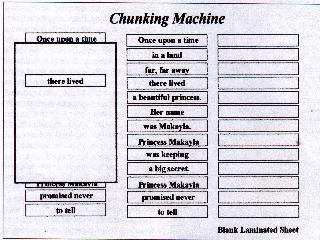
Short phrases with familiar words tin can be introduced through chunking machines. A chunking machine is a tachistoscope that allows a student to pull the reformatted or chunked text through the window to increase speed of recognition. (Meet Figure four for an instance of a chunking machine.) Information technology is important to put comprehension questions at the starting time and stop of this activity. Students benefit from an advanced organizer before reading to help them conceptualize what they will be reading. The same series is read until the students can pull the phrase strips through apace and reply all of the questions correctly. Chunking machines are elementary to make and permit the educatee to focus on small portions of text at 1 time. If teachers wish to emphasize one particular word that is of import for comprehension, they may chunk it separately or underline it for text. Once text has been reformatted, students can transfer these phrases to the cards and make chunking machines for each other.
Slash Marks
For older or better readers, teachers tin mark the phrasal boundaries with slashes for short passages. Eventually, the slashes are used but at the get-go of long passages and so students are asked to continue, "phrase reading" fifty-fifty later the marks cease. Mark phrases can be done together with students or those on an independent level may divide passages into phrases themselves. Comparisons can be made to clarify reasons for differences in phrasing.
Some other way to encourage students to focus on phrase meaning and prosody in addition to word identification is to provide tasks that require them to place or supply a paraphrase of an original statement. There are semantic paraphrases and syntactic paraphrases (Pearson and Johnson, 1978). Some examples follow:
Semantic Paraphrase:
Jim jumped over the bushes.
Jim leaped over the hedge.
Syntactic Paraphrase:
Jim flew the kite. (active voice)
The kite was flown past Jim. (passive voice)
Teachers tin change the punctuation and vary intonation of paraphrases to increase pupil's ability to quickly accommodate to changes. Word tin can focus on the differences between "jumped over the bushes" and "leaped over the hedge." "Leaped" is a somewhat more interesting prototype so students might give it more stress during oral reading. They could then supercede it with "divisional over the shrubbery" and hash out if this paraphrase changes the meaning and practice reading it. Because texts in different content areas tend to contain slightly different syntactic patterns, various reading of undemanding materials in different subjects and genres can be valuable during activities for improving fluency and comprehension.
Scooping
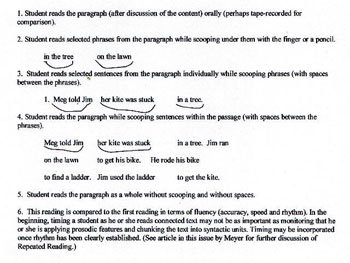
The incorporation of a multisensory component of scooping nether syntactic chunks may benefit some students as they read at the text level, where the appropriate awarding of intonation and stress in conjunction with speed and accuracy are considered primary. The following is a suggested progression for repeated readings of a paragraph that incorporates systematic work at the phrase and sentence levels:
Developing Anticipatory Set
As noted higher up, in addition to repeated readings and other sorts of speeded practice, it has been suggested that fluency is enhanced by beingness able to anticipate what is to come in the text, which in plow enhances comprehension. Wood et al. (2001) advise that in addition to activities that involve developing automaticity, helping children to predict what is coming next is important. "Setting the stage" through activation of prior knowledge and reviewing what will be happening in the story can exist instrumental in helping students predict text content. Summarizing the story and discussing the characters or previewing the pictures to get ideas of what the story may exist about may serve the purpose of improving anticipatory prepare and thus enhance fluency. Other normally used strategies such every bit reviewing the vocabulary and comprehension questions earlier reading the passage may also be helpful in this regard. (See the J and J Language Readers, Greene and Forest, 1993 for examples of these kinds of activities.)
Summary
Effective reading comprehension requires not but accurate reading skills but too automated and fluent reading ability. Many struggling readers have difficulty moving to a level of automaticity and fluency that allows them to easily comprehend what they are reading. We take discussed the underlying processes involved in developing fluent reading besides as suggested some techniques for improving fluency. Research in the expanse of developing accurate decoding has consistently indicated that a systematic code based approach is important for teaching beginning reading skills. The best techniques for developing fluency, however, take non yet been clearly established. The suggestions here are based on clinical feel and more than systematic research is needed to determine which methods or their components volition be the most efficient.
References
Adams, Chiliad.J. (1990). Commencement to read: Thinking and learning about print. Cambridge, MA: MIT.
Chall, J. (1996). Learning to read: The slap-up debate (3rd Edition). New York: McGraw-Hill.
Chall, J. (1983). Stages of reading development. New York: McGraw-Hill.
Bell, N. (1997). Seeing stars. San Luis Obispo, CA: Gander Educational Publishing.
Clark-Edmands, South. (1998). Specialized program individualizing reading excellence (SPIRE). Kennebunk, ME: Progress Learning, Inc.
Fischer, P.E. (1994). Concept Phonics. Farmington, ME: Oxton House.
Frith, U. (1985). Beneath the surface of developmental dyslexia. In Paterson, K.E., Marshall, J.C. and Coltheart, Grand. (Eds.), Surface dyslexia: neuropsychological and cognitive studies of phonological reading. Hillsdale, NJ: Lawrence Erlbaum Associates.
Gillingham, A. and Stillman, B.W. (1997). Remedial grooming for children with specific disability in reading, spelling, and penmanship. Cambridge, MA: Educators Publishing Service.
Greene, J.F., and Forest, J.F. (1993). J and J language readers. Longmont, CO: Sopris West.
Lyon, G.R. (1995). Towards a definition of dyslexia. Annals of Dyslexia, 45:3-27.
National Reading Panel (2000). Teaching children to read: An evidence-based assessment of the scientific research literature on reading and its implications for reading instruction. The states Department of Health and Human Services, National Institute of Child Health and Human Development, NIH Pub. No. 00-4753.
Pearson, P.D. and Johnson, D.D. (1978). Teaching Reading Comprehension. New York: Holt, Rhinehart, and Winston.
Sanders, G. (2001). Agreement dyslexia and the reading procedure: A guide for educators and parents. Needham Heights, MA: Allyn and Bacon.
Snow, C.E., Burns, G.S., and Griffin, P. (1998). Preventing reading difficulties in young children. Washington, D.C.: National Academy Press.
Steere, A., Peck, C., and Kahn, L. (1988). Solving language difficulties. Cambridge, MA: Educators Publishing Service.
Raines, B.J. (1980). Alphabetic Phonics. Cambridge, MA: Educators Publishing Service.
Torgesen, J.K., Rashotte, C.A., and Alexander, A.W. (2001). Principles of fluency education in reading: Relationships with established empirical outcomes. In Yard. Wolf (Ed.), Dyslexia, fluency, and the encephalon. Timonium, MD: York Printing.
Wood, F.B., Flowers, L., and Grigorenko, E. (2001). On the functional neuroanatomy of fluency or why walking is just equally important to reading equally talking is. In M. Wolf (Ed.), Dyslexia, fluency, and the brain. Timonium: York Press.
Boosted Resource
Carreker, S. (1999). Didactics reading: Accurate decoding and fluency. In J.R. Birsh (Ed.), Multisensory teaching of basic linguistic communication skills. Baltimore, MD: P.H. Brookes.
Honig, B., Diamond, 50., and Gutlohn, L. (2000). Teaching reading: Sourcebook for kindergarten through 8th grade. Novato, CA: Loonshit Press.
Pamela Eastward. Hook, Ph.D. is an Associate Professor in Communication Sciences and Disorders at the Massachusetts General Hospital Institute of Health Professions, a graduate-level training program in spoken communication-linguistic communication pathology and reading. Her research interests include the relationship between oral and written language, auditory processing and nonverbal learning disabilities. She has been a consultant to schools, designing language arts curriculum, preparation teachers, and working with parents. She also designs computer software to teach phonemic awareness and reading skills.
Sandra D. Jones, Ph.D. is the Program Coordinator for the Hanson Initiative for Linguistic communication and Literacy (HILL), a whole school model for professional evolution, research and educational outreach that is affiliated with the MGH Constitute of Health Professions. She has conducted enquiry in the areas of auditory, visual, and cognitive intervention strategies for dyslexic students. She has been a consultant to schools in the areas of literacy, learning disabilities, beliefs management, engineering science, strategic planning and group facilitation techniques, and policy.
Source: https://www.spellingcity.com/fluency.html
0 Response to "On Tests of Verbal Fluency, Reading Comprehension, Spelling, and Basic Writing Skills:"
Post a Comment